Showing posts with label NSW. Show all posts

Monday, 9 May 2022

Morpeth, New South Wales

The tiny town of Morpeth, N.S.W., located on the Hunter River in the Upper Hunter Valley, was where my ancestors decided to live when James Perrett immigrated to Australia with his wife Sarah, and 9 children in 1839. We have visited the Hunter Valley numerous times, usually on the way to somewhere else, but this time we are 'filling in' time before going to the Tamworth Country Music Festival, we decided to explore the Maitland area. We had lunch at Queens Wharf, or rather where Queens Wharf once was. There had been a lot of rain the past month and the park was still very muddy, so we ate in the car park. Queens Wharf was first established in 1833 as part of the development of many ports radiating from Sydney to provide transport routes for goods and people.

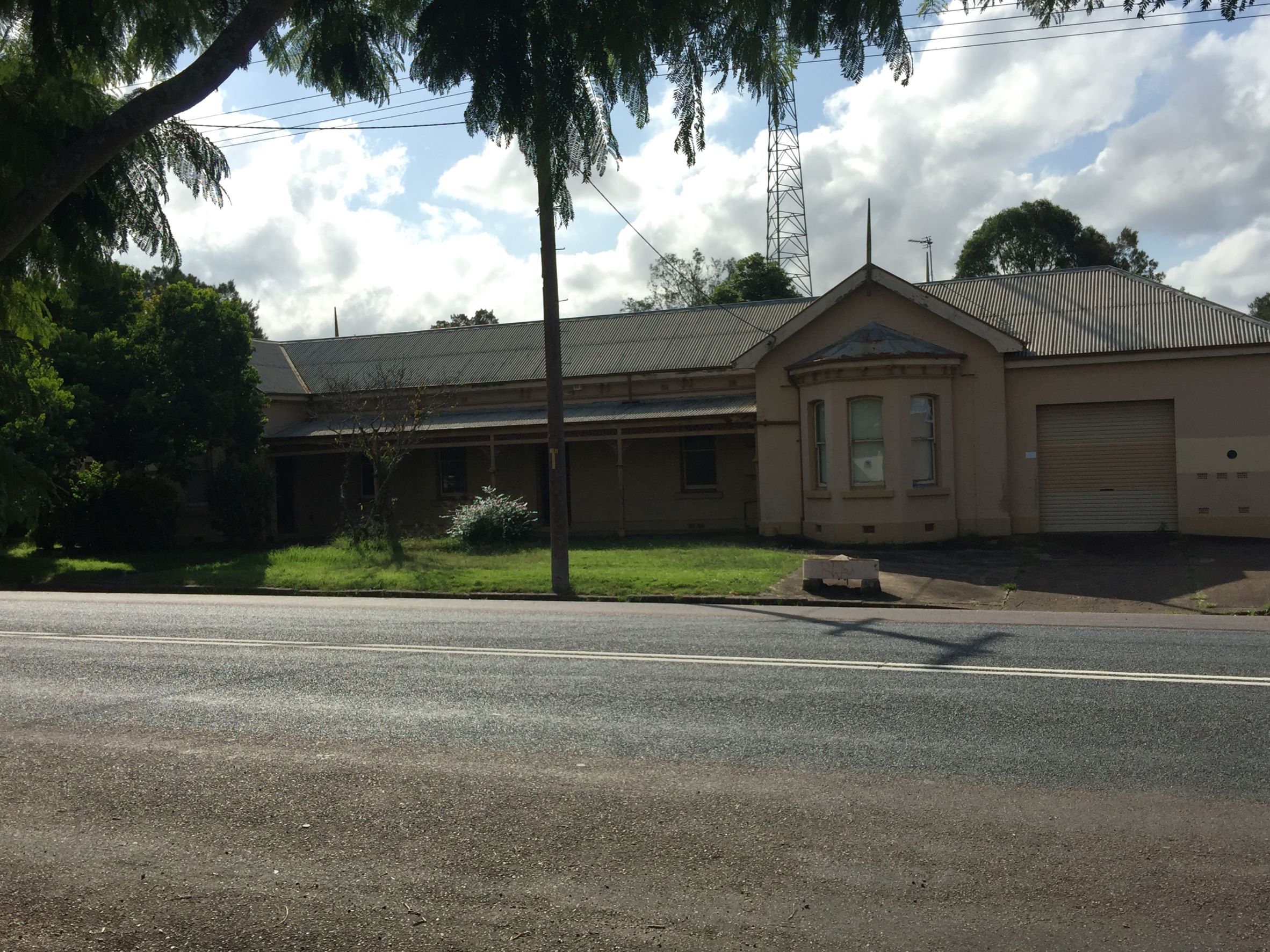
We then drove up to the main street, Swan Street, parked and walked around. There is a really good Heritage Walk issued by the Maitland City Council. Walking the streets one can see many Georgian and Victorian grand houses, now mostly restored or being restored private residences.

Morpeth is now classed as a suburb of Maitland, but back in the day it was a major town in it's own right. Established on the banks of the Hunter River, the town grew from a homestead built in 1826 (Closebourne House) to a lovely National Trust listed town due to its lovely colonial preserved buildings. The first inhabitants were the Gringgai/Wanaruah peoples who called the land Illalaung - the area was once covered in cedar forests, that can now be seen in many of the colonial buildings. Starting point for the Heritage Walk is Illalaung Park near the old wooden bridge.

Morpeth was very important in the development of the Hunter Valley, and the development of developing regional NSW. Located on one of the important river systems north of Sydney, Morpeth became a major transport centre that led to development of industry and agricultural markets. The first Europeans was the party of Lt Col. Paterson who explored the area in 1801. Patterson named the area Green Hills. In 1821, as a reward for duty during the Napoleonic Wars, Lt Edward Close was granted land in the area, and he built a grand house in 1826 named Closebourne, that still stands today. The first paddle steamer, Sophia Jane, reached the port in 1831, and this was the beginning of the regular steamer service. In 1834, Green Hills was renamed Morpeth. The name Green Hills can still be seen today in industry names, suburbs and streets. Lt. Close also built the first school in 1836, and one of the original brick buildings is still in use today.

Most development happened between 1837 - 1840 with St James Church, on Tank Street, now being heritage listed. Built from local sandstone by Lt. Close on his land. Some of my ancestors were married there. Only the tower is remaining from the original church.

An interesting story about pharmacist Caleb Soul, who managed a pharmacy on Swan Street - Caleb of Soul Pattison fame! Some websites say he managed the store in the 1840's and had built the house across the road in 1822. I don't think either is true.

Caleb Soul was born in London in 1817 and came to Australia about 1863 and managed a store at Morpeth with his son Washington Soul. They relocated to Pitt Sydney in 1872. (information from:G. P. Walsh, 'Soul, Caleb (1817–1894)', Australian Dictionary of Biography, National Centre of Biography, Australian National University, https://adb.anu.edu.au/biography/soul-caleb-4624/text7615, published first in hardcopy 1976.)

Caleb and his son Washington made their famous talcum powder in the shop that they managed, which was the Taylor's Bonded Store. It was also said that Caleb made the strongest rum in the colony - must have been for medicinal purposes😊. Built in 1850, Taylor's Bonded Store is across the road from the Courthouse/ Museum. The CBC Bank was originally in this sandstone building.

Caleb lived down the road on the corner of Swan and Berkley, in a lovely early Pioneer/Victorian house, now a boutique hotel The Bronte. Caleb Soul did not have the house built as it was built about 1822 and Caleb was 5 years old and living with his parents in London.

I think Morpeth is most famous (other than where my ancestors first lived in Australia 😊) for the beginnings of Arnotts Biscuits. William Arnott and his brother David set up their first bakery on Swan Street, Morpeth in 1862. They rented a shop built in 1851 right on the river. The sandstone bakery is still being restored with the help of the Arnott brothers decendants, and today is famous for Sourdough, and owned by the Arnott family. Like many shops it was closed on the day we visited, Tuesday, but we didn't mind as less people were around.

Morpeth was a major port in the 1830's to 1850's and James Taylor built a bond store about 1850, and Campbell built his store about the same time. Campbells store is the first building one sees when driving into town. A large building on the corner built of local bricks and sandstone.
1857 saw the construction of the Great Northern Railway, that by-passed Morpeth, leading to Newcastle being developed as a major port. However, Morpeth kept developing with the Court House being built in 1861. It is now the museum.

1866 Morpeth became a municipality and had 10 hotels. over a hundred years later, 1969, Morpeth became a suburb of Maitland.

Another interesting story begins in 1873, and saw an enterprising 15 year old rowing from Newcastle to Morpeth to collect meat, produce and dairy goods to deliver back in Newcastle. His name was Walter Bramble, and his delivery business was the start of his International Transport Company, Bramble's.

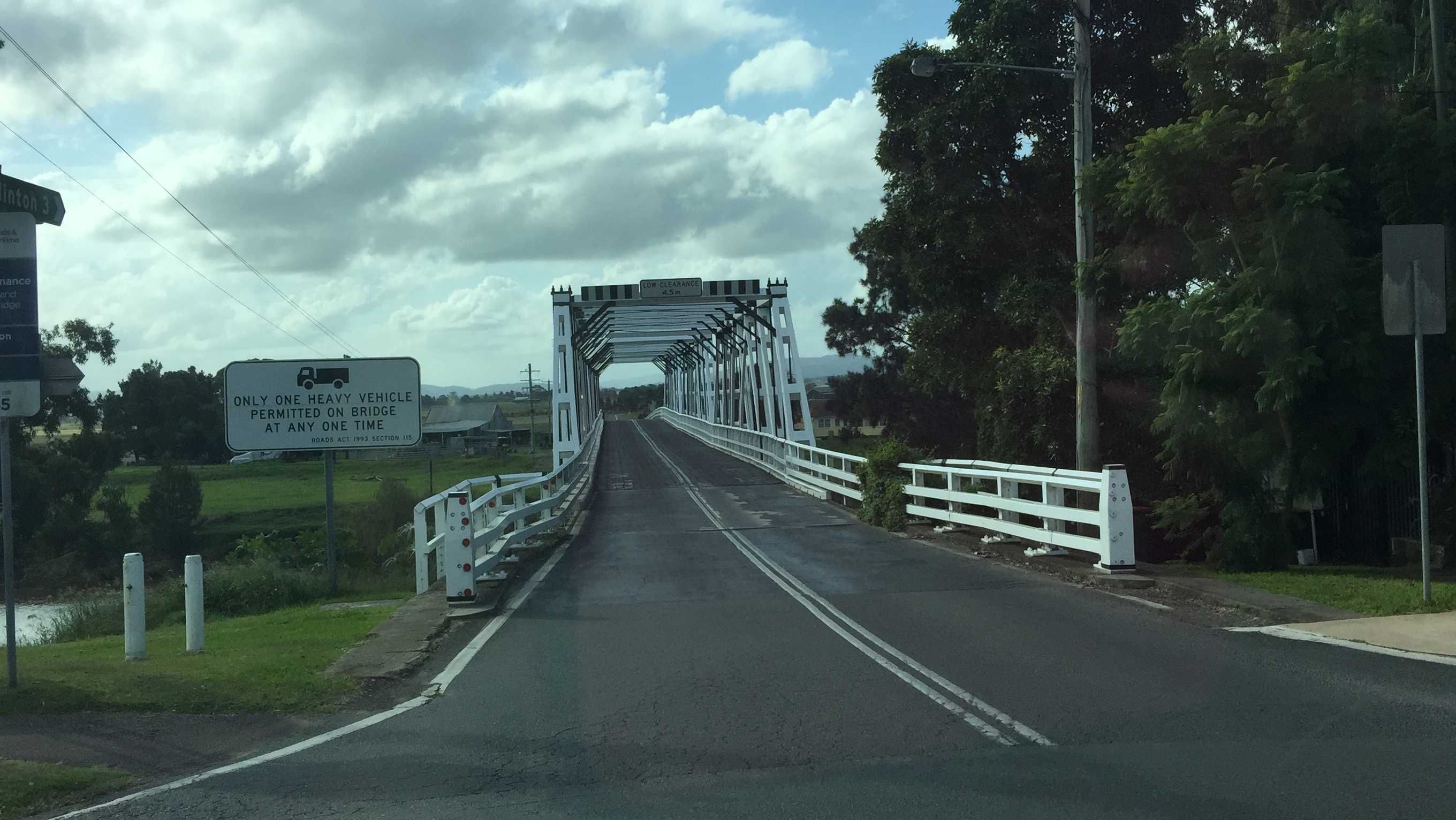
In 1898 the Morpeth Bridge was opened which further connected out lying properties. The bridge is the oldest of only three remaining timber truss road bridges left in the country. I wonder if the timber truss bridge burnt in the 2019/20 bush fires at Genoa was one of the three. The Morpeth community held meetings as early as 1870 to promote a bridge across the Hunter River to Morpeth. The bridge is two lanes and was opened Wednesday 15 June 1898. A negative with the bridge was that it reduced the amount of boats coming down the river as some were too big to get under the bridge.
The town today is full of little cafes, boutiques and craft shops, sandstone gutters and beautiful heritage architecture. Maitland Council provides a Morpeth Heritage Trail with audio commentary to download, and there is so much more to see. There are prominent signs on the buildings......

.....the pathways.
We loved the 'carpet' painted at the beginning of Berkley Street. Bronte Hotel on the left and the old CBC bank on the right.
The old School of Arts building on High Street was being renovated. Built in 1862, it included a library, reading room, stage and hall. The first Morpeth Council was formed there in 1865.

The CBC Bank on Berkley Street, built in 1889 and designed by the Mansfield Brothers was also being renovated. The bank was originally housed in the Taylor Bond Store. It would be lovely inside I'm sure as the exterior was very grand looking. It looks too big for a private residence, maybe it will become a boutique hotel.

Next to the CBC Bank are a group of restored terrace houses built in the 1850's, and a really nice bakery. Known as Ingall's Terrace, Richard Ingall was a local butcher and property developer.
The old railway station doesn't look like a railway station. Built in 1889 to service the railway that opened in 1864. The line closed in 1953. Really doesn't look like a railway station.
The Post Office first opened in 1838, and operated out of the Court House in the 1860's until this building was opened in 1881. Designed by James Barnet, it still looks impressive today.
River Royal Hotel has chandeliers hanging out front, and is one of the oldest hotels in town. Opened in 1876 it catered for the travellers arriving at the wharf and the station. 
 

The old Trading Post building in Robert Street is being renovated. Originally owned by J.G. White Joinery and operated as a family business from 1838 to 1968, it has a well that links into a still running spring and is believed to have been the villages first water supply. It was dug around 1818.
Known as Murphy House, this two story residence was build by Moses Murphy. Murphy was born in Wexford Ireland in 1800 and died by accidentally drowning near Morpeth one night. He was the licensee for two busy hotels. In 1852 he was granted a license for the Crown and Anchor Hotel and in 1855 he was granted a license for the first Commercial Inn down near the wharf. His residence was located in the 'rich' part of town.
The Aster Theatre started as a primitive Methodist Chapel in 1856. It later became a school and in 1921 it was converted into a theatre. It ceased being a theatre and has been used as various stores.
It appears to be getting ready for some restoration.

Just so much more to see here, and this was a quiet day. Imagine being here on market day or weekends when all the shops and cafes are open.

Morpeth is 2 hours drive from Sydney (168km), and 40 mins from Newcastle (37km). 

Sunday, 18 March 2018

Road Trip Week Two into Three

We love the beautiful south coast NSW beaches, and each time we pass them we wish we had more time to stay. Maybe next year we will do the trip north and have the time to explore. We left Kioloa early afternoon and stopped for lunch at Tuross Heads. We didn't expect to find this fish and chips cafe on the water front. Great lunch.
We headed for the Victorian border and a place we have stayed at before, Genoa. Genoa is a donation camp site with toilets and bbq's. There is an historic bridge at the end of the park and a river which has a few ponds of water to cool off in if it is hot. We got there later than we would like and there were already many vans there. We still found a good spot close to the toilet block.The next day we had lunch at Lakes Entrance before our next overnight stop at Golden Beach Community Centre RV stop over. Another spot we have stayed at previously. This is a donation camp and provides long individual camp sites. It is a short walk to the beach and this time it had a community herb and vege garden – no mint for my mojito though! It would be great to stay longer, but as always heading to Victoria we are on a time frame, so one night it is.
It was then a short trip to the Latrobe Valley in Gippsland and the reason for this trip. We have already visited many places around the Latrobe Valley and beyond, so this time it was good to not plan anything but enjoy the company of family. The rest of the week and the next were spent chatting about old times. It was an enjoyable week.

Thursday, 25 January 2018

Step Back in Time

We left Parkes and headed along the Renshaw McGirr Way to Yeoval. What a lovely little town, and childhood home to A.B. Patterson. We will come back when we have more time, and visit all the statues along the way. The next stop was Wellington to see the site of the last recorded pistol duel in NSW. A plaque is situated in Teamsters Park that states that the duel took place in 1954 between Dr Samuel Curtis and Mr B Sheriden due to the influence of liquor. Researching, this may have been the last duel in Australia. B Sheriden was the local magistrate. The duel was over a women who both men thought was 'theirs'. They had been drinking in the nearby Lion of Waterloo and decided to take pistols to the nearby Teamsters Park to solve the issue. The guns misfired and both men fell to the ground drunk.
Not far away is the Lion of Waterloo that is believed to be the oldest licensed hotel west of the Blue Mountains that is still standing. It was built in 1841, not long after the plans for Wellington were drawn up in 1839. The pub and nearby park were used by Cobb & Co as a stop. Wellington was gazetted a town in 1846.
We then continued on the Goolma Road to Gulgong for the night. We pulled into Gulgong Showground, where there were already a large number of vans. The cost is $16 per night for power and water. The caretakers Colleen and Steve were lovely and even invited all the campers to happy hour where they provided cheese and snacks we provided our own drinks and chairs. It was a great idea and we met some lovely people. We decided to stay two nights and spend some time in the town the next day looking around.
 When I read that Gulgong had over 130 heritage-listed buildings I didn't believe it until we walked around the streets. So many interesting and historical buildings. Gulgong is a gold town. Gold was discovered there in 1870 with a large strike at Red Hill. Prior to the gold discovery the Gulgong area was a sheep property.
We parked beside the information centre, which is only opened on the weekend, and walked along the main streets, stopping at symbols on the symbol trail, and not knowing what they were. We stopped at a sign which showed a map of a historic walk and planned our trip, when a local pulled up in his car and gave us a copy of a history walking tour of Gulgong. BONUS, although we did need to walk back to see things we didn't know were there LOL. The booklet also had a symbol trail meaning – good to know. The symbol trail are symbols that swagmen and travellers would leave in the dirt for other travellers to let them know is the places were friendly or not. There are about 70 tiles laid out on the streets.
Gulgong and Henry Lawson are on the first $10. He lived very near to Gulgong. His father was a builder and Henry helped him build some of the houses in Gulgong. There is a Henry Lawson Discovery Centre in the town, and every June long weekend, Gulgong hosts the Henry Lawson Festival. Henry Lawson was born in Grenfell but went to school between Mudgee and Gulgong.
There is also a Chinese Festival in October. The Chinese flocked to gold fields in the 1800's and many gold towns have Chinese heritage. Both festivals would be good to visit.
The main Mayne Street has Australia’s oldest operating opera house, the Prince of Wales opened in 1871, and Dame Nellie Melba performed there. There is a replica mine at Red Hill, wher the first gold strike was, that looked interesting but we didn't go there.
There is a Pioneer Museum which other campers went to and said it was good. It is located in the old bakery and produce store. We have been to so many country museums in the past few years that we don't often pay for museums now, although I do like to see the antique sewing machines. But I guess we will visit next time we are in Gulgong.
We were very impressed with Gulgong. It was like going back in time.

Wednesday, 24 January 2018

One for the Money, Two for the Show....

The Elvis Festival
WOW what a great festival. They say a picture says a thousand words, well I took over a thousand photos – here are just a few of them.
The 2018 Elvis Festival celebrated 50 Years since the '68 Comeback Special. The festival takes place the second week in February from the Wednesday to the Sunday. There were competitions, displays, a street parade, and heaps of free entertainment, especially in Cooke Park.
Starting north of town, at the Henry Parkes Centre, one can get local information and visit four museums: The Kings Castle houses a good collection of genuine Elvis artefacts; The Motor Museum has classic cars; Henry Parkes Museum tells the history of Sir Henry Parkes; and The Antique Machinery Museum. 
Heading into the CBD, on the left is Kelly Reserve. When we are on a road trip and drive through Parkes, we always stop at Coles and the French Bakery and then we stop at Kelly Reserve to make lunch. There are mini replica gates of Graceland and Elvis' Wall of Fame that we must have driven past at least 20 times, and never knew they were there. The wall has plaques dedicated to rock and roll singers through the decades. 2018 will be the Emmanual Brothers. Apparently the Emmanuel family lived in Parkes and the brothers, Tommy and Phil, went to Parkes High School.
The local Library is one street back from the the main street, Clarinda Street. We went there on the Wednesday morning to see the JFK Photographic Exhibition, 'American Visionary: John F. Kennedy's Life and Times', which is only being displayed in 12 countries around the world, and Parkes is only the second venue in Australia.
Also in the Library, we saw a video on '25 Years of the Parkes Elvis Festival'. The festival had its beginnings over dinner in the Gracelands Hotel – across the road from the van park. The library also played Elvis movies free throughout the festival.
Walking down the main street, some of the shops have an Elvis display in their windows. An interesting shop is Colouby, with items from the 50's and 60's, as well as clothes to purchase to dress up for the festival. It was definitely a fun shop.
Parkes also has a Public Art Trail at present consisting of 6 art works, all situated along, or nearby Clarinda Street. 'The King' art work is in Court Street and visible from Clarinda Street.
Fun while walking around the festival was looking at the large number of people dressed in costume – clothes of the 50's and 60's, and Elvis and Priscilla wigs, even children and dogs were in costume. There are plenty of cafes, clubs, pubs and eateries, both in Parkes and in Cooke Park. We had a few things in the park, that were ok, and had lunch in one of the clubs which was good, but the best food was at Paragon Cafe on Clarinda Street.
Clubs and venue places had paid and free entertainment. Even the Parkes Radio Telescope held a Elvis Tribute Artist Dinner. There was so much entertainment that it was hard to choose, and the good thing was that most of the entertainment was walking distance from the CBD. The main street had buskers of all ages from the Tuesday to the Sunday. There was Elvis Trivia and Elvis Bingo.
The Elvis Tribute Artists were, on the whole, good. We saw many of them free in Cooke Park. Jack Gatto (ETA winner 2016), Sean Luke Spiteri, Ben Thompson (UK), and Marcus Jackson were the best we saw. We were lucky to see Jack Gatto as his shows were mostly paid shows. We saw his free show at the Cooke Park stage. One fun event was the renewing of vows on Sunday. Ben Thompson sang two songs at this renewal ceremony. He was very good.
Some of the shows, we thought, were expensive ($66) and many were booked out months ago. As well as the ETA, we saw tribute artists for The Blues Brothers, Roy Orbison, The Beatnix, Tom Jones. A girl group 'Amitie' were great and sang all the songs that I grew up with.
We had some very hot days – Friday was a hot 39 degrees C (102 F) but on Saturday for the parade it was grey and rainy and a top of 19C (66F). That didn't stop many from watching the parade. The local morse code group even handed out free raincoats. The parade went for an hour and most ETA were included as well as local and far away groups.
Parkes has for a long time had a statue of Henry Parkes in the main street. This year a statue of Elvis was officially unveiled 12 January, but it was actually unveiled for media on Elvis' birthday 8th January – and that was when we saw it.
Buses do a circuit every hour. At Spicers, there were two buses running on different circuits, which meant people could get a bus every half hour. Fares were $4 per ride, or $16 for the whole Festival – Wednesday to Sunday. Information about what was on was easily available in most places, from a lovely 84 glossy page book ($8) to a fold and take any where free pamphlet – and everything in between.
Everyone should experience it even just once, although I'm sure most will want to come again and again. One 'Can't Help Falling in Love' with this festival. We have booked for next year.

Sunday, 8 October 2017

Gem on the Gwydir River

It was hard trying to decide whether to stay another night in Texas as it was so lovely, but we decided to head towards Warialda and the Fossickers Way. I had chosen a few different sites at both Warialda and Bingara, so after filling with petrol, getting some more meat, and getting Peter's coffee fix we headed south. Warialda is about 126km from Texas on the Bruxner Highway to Yetman, then on the Warialda Road to Warialda. We stopped for a photo of the bikini tree just outside of Warialda. In Warialda we headed straight to the information centre, only to find it was closed. By this time we had decided that we would go the extra 35km to Bingara, but drove around to look at the free camps at Warialda. There is one behind a pub which is where we will stay next time, as the town looks lovely with many historic buildings. The other free camp is fairly open, and we stopped there for lunch, which I had prepared earlier.
We drove down the Alan Cunningham Road to just before the town of Bingara to the Bingara Riverside Camping Area. So many vans already there and such a lovely spot. I know, they are all lovely spots, but Australia is beautiful!
We found a lovely spot right on the river banks with lovely neighbours. We had drinks around the campfire and then dinner. There is phone reception but no TV, so the satellite is getting another workout. It was cold overnight, so the heater also got a workout. We decided to stay at least two days.
The following day we drove into town. There is a dump point and water available ($1) to top up the vans. Being Sunday, most shops are shut so we had no trouble getting a parking spot.
While looking at the beautiful architecture of the closed Emporium, a local lady, Brenda, started telling us all about the history of the town. She has lived here all her life and was a wealth of information. Across the road from the Emporium is Peter's Milkbar and the Roxy Theatre, lovely examples of art deco. This is also the location of the information centre. We walked up and down the main street enjoying the different styles of pressed tin awnings, all of which I could make a quilt pattern from. The town has a 'soundtrails' audio tour that one can download which is good. However, not when one wants to do the town tour there and then. We will download the app when we get home and have better wifi coverage. We walked up and down liking what we saw, but didn't know the history. Peter had look at XXXX beer - $53 a carton. He said he will wait for Tamworth.
The Roxy Theatre complex was built in 1936 by three Greek immigrants from Kythera. It operated as a theatre until 1958, and was restored and re-opened in 2004. It now houses the tourist information centre, a Greek heritage in Australia Museum, an old style milkbar as well as the theatre and cinema. One of the back buildings also doubles as a cooking training venue.
There is also a street lined with orange trees and an orange festival is held every July. No one is allowed to pick the oranges until one day in the festival when the school children are allowed to pick all the oranges. We must be here too early in Spring as the trees do not have any buds yet. The trees were planted by the Bingara RSL Sub Branch in 1946.
We drove up to the Batterham Lookout and it is well worth a visit. No caravans as it is a very steep climb. It is named after a local historian who did much to promote Bingara. We also drove to the Living Classroom site. One can see the beginning of this project with greenhouses and bunkhouses erected and some planting have already taken place. It will be a great place to visit in years to come.
There is an old ore stamper battery in a picnic area south of town. It is all that remains of the All Nations Gold Mine, established in 1860, and closed in 1948. The discovery of gold in 1852 bought many settlers to try their luck. This may be where the McDougall's from Texas came to find their fortune. Today there are many places around Bingara that one can fossick for gems.
Bingara was named by the local Aboriginal people who would camp at a shallow point of the river that they called this camp Bingara, meaning creek. The local Aboriginal peoples were the Kamilaroi. Explorer Alan Cunningham also camped in the same spot in 1827 and as this was the largest river he had seen since the Hunter Valley he named the river Gwydir after his benefactor in Wales, Lord Gwydir. The first squatters came in 1834, the first being 'Bingara' property, established by George Hall. By 1840 a township was forming and in 1852 it was officially surveyed. During the 1850's gold was discovered in many place around Eastern Australia, and in 1873 diamonds were found.
Bingara is a lovely heritage town, that we will return to. The Myall Creek Massacre occurred not too far from here. We will visit that memorial next time.