 We stayed at the Biloela Heritage Park which was a great base to explore the area. It is $15 a night for power and water and the park is locked behind coded security gates. There is a maximum of 2 nights, shame it is not three as we would have liked to have stayed an extra night. The sites are flat and grassy and there is plenty of space around each site. There are 60 sites, but only 30 are allotted each day. This makes most sites drive through. The camping fee includes entry into the museum, which was very interesting. Even saw some art works by a friends father there.
The museum consists of a large silo that houses a coffee shop and artifacts are well displayed.
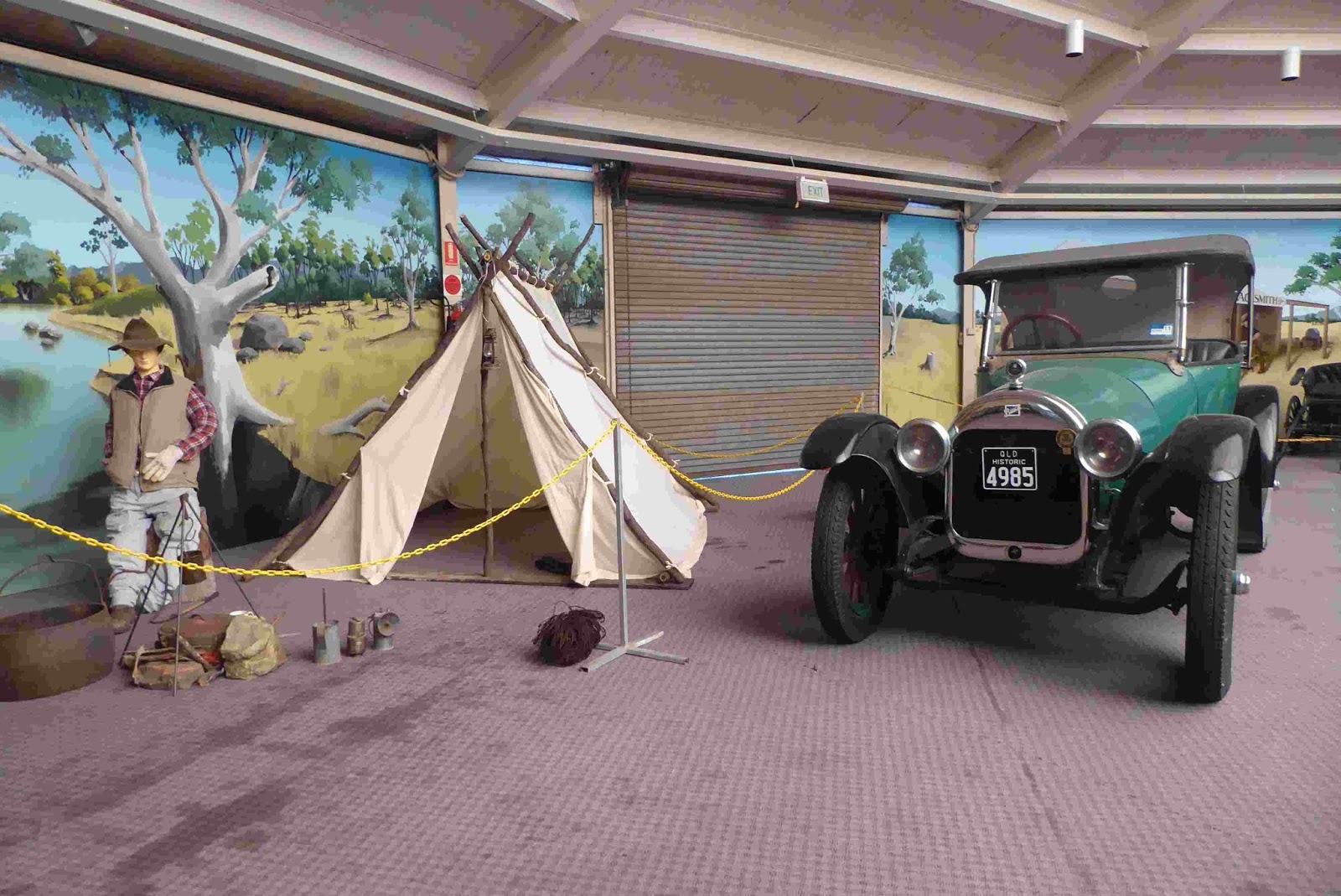
Outside in the complex are a number of sheds and buildings. The sheds house old machinery and trucks. The old Presbyterian Church, build in 1931, was moved here. It houses many photos of old Biloela as well as household, and church memorabilia.
 The old church is next to the old railway station. The building houses school, doctor and dentistry equipment, as well as railway artifacts. I was impressed with the ticket office being still very much in the original state. Usually when visiting old railway stations the building has been cleared and all that is left is the shell, or the ticket office is locked for storage. This ticket office was set up to look like a ticket office, as it was, with behind the counter and the customer side.
Little things get me excited LOL.

Biloela was first settled in 1854 with cattle farms, however the area became better known for dairy or crop farms. The name Biloela is believed to have come from the Aboriginal word for white cockatoo. The Gangulu tribe inhabited the area before European settlement. The first European to explore the area was Ludwig Leichhardt in 1844.The railway station came in 1924 and the Callide Coal Mine began in the late 1940's.

Little things get me excited LOL.

Biloela was first settled in 1854 with cattle farms, however the area became better known for dairy or crop farms. The name Biloela is believed to have come from the Aboriginal word for white cockatoo. The Gangulu tribe inhabited the area before European settlement. The first European to explore the area was Ludwig Leichhardt in 1844.The railway station came in 1924 and the Callide Coal Mine began in the late 1940's.
After setting up we did the cultural heritage loop tour. We went to the Village Square and Melton Park first. There is a wonderful maze there for kids, of course we had to do it!


We then followed the loop past the original shop fronts to the old art deco theatre dating back to 1928. We then drove to the Spirit of Land mural to start the next loop.
The 'Spirit of the Land' mural tells the the story of women from two different cultures connecting to celebrate life's everyday events over the centuries.
 It has been painted on a large water tank.

 Next stop was just down the street. Greycliffe Homestead has been relocated from its original site on the Greycliffe property, 37kms away, in 1979, after the last member of the family had passed away in 1974. It was originally built in the 1870's and renovated in the 1920's. It was owned by the Nott family for over 100 years. William and Sophia Nott and their surviving daughter Helen moved into Greycliffe House in 1876. January 1877 saw Alfred the first child of seven born at the property. There is also a slab hut kitchen, blacksmiths and shed. Greycliffe House has
been listed by the National Trust of Queensland and is open by appointment only.
Next stop was just down the street. Greycliffe Homestead has been relocated from its original site on the Greycliffe property, 37kms away, in 1979, after the last member of the family had passed away in 1974. It was originally built in the 1870's and renovated in the 1920's. It was owned by the Nott family for over 100 years. William and Sophia Nott and their surviving daughter Helen moved into Greycliffe House in 1876. January 1877 saw Alfred the first child of seven born at the property. There is also a slab hut kitchen, blacksmiths and shed. Greycliffe House has
been listed by the National Trust of Queensland and is open by appointment only.
 Not far away, in the Lions Park, corner Cooper St & Dawson Hwy, is a large directors chair to commemorate the famous director / actor / playwright, Bille Brown who was born in Biloela, 1952. He was a member of the Royal Shakespeare Company and appeared in films including 'The Dish'.
He died in 2013 of bowel cancer.


He died in 2013 of bowel cancer.

The next day we went out to Callide Mine and Callide Dam. On the way we stopped at the local quilt shop, The Fabric Nook, which I had visited the day before after doing the grocery shopping.
 The lady in there was very helpful and I did but some scrap packs and a Lorax panel to go with the Lorax fabric and jelly rolls I have at home.
 We followed the directions on a tourist map out to the Callide Mine viewing site. It is an interesting drive to the lookout and is really worth a visit. It well presented with explanation boards in the lookout platform explaining how coal is formed and how it is mined to be environmentally friendly to the landscape. Very interesting.
 We watched the trucks filled with soil come and go for 15-20 minutes - it was like watching a fish tank. The soil is moved from one place to another, sort of like moving the hills along.
 Along the road going up to the lookout are a few pull ins to look at the views of the dam, the lake and the power station.
 We continued on Coal Road to the site of the Rainbow Hotel, the first pub in the area. It was built in 1874, but really nothing remains of it now. The first liquor license in the area was granted in1865 to Thomas and Catherine O'Reilly. Their daughter Margaret was the first white child born in the area.
The hotel remained in operation until 1902, and the family continued to live there. After the death of her mother in 1912, Margaret O'Reilly and her husband Ned Wallace and their family lived there. It later became a residential home for a Mr Wallis, when he purchased the estate.
It was still standing in 1933. (“Brisbane Courier” 5 August 1933 p21)
Sadly in 2012-13, as gas pipeline workers were digging a trench, they piled soil from the pipeline trench onto the hotel remains and a bull dozer was later sent in to level the site. The nearby graves of Catherine O'Reilly (1838-1912) and her son Thomas Jnr (1867-1904) still exist and can be seen from the road. The site was fenced with a surrounding garden and set aside by Thomas O'Reilly as a resting place for his family. Sadly he died in Gladstone from a stroke and was buried before his wife had even been informed of his death. The graves were restored in 2001 by the Local Historical Society and the Banana Shire Council. In 2014 a large boulder was placed near the road to indicate where the hotel was located. It includes picture of the hotel and map of the area. It tells the story of the O'Reilly family.
 From here we went to the Callide Dam for lunch. The dam is located 12 km from Biloela and was constructed in 1965 to supply water to the Callide Power Station. The lake has ample supplies of fish including barra and golden perch (Peter said I should include this), although there were no boats on the water, probably because it was a week day. There are many covered picnic tables with not only bbq's but also sinks and water. The lawns are well maintained and I can imagine how busy the lake surrounds will become on weekends. We did find a great free camp along the lakeside, on a farmers property. Apparently the farmer visits often to check all is ok, and his cows roam freely among the vans. We may spend a day or three camping there one trip.
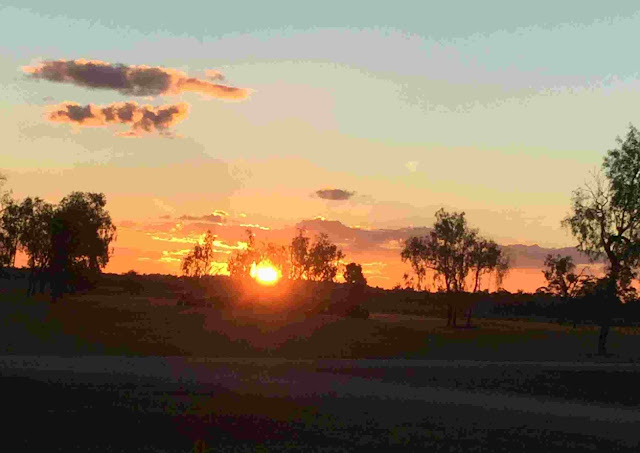
I love the sunsets.


The hotel remained in operation until 1902, and the family continued to live there. After the death of her mother in 1912, Margaret O'Reilly and her husband Ned Wallace and their family lived there. It later became a residential home for a Mr Wallis, when he purchased the estate.
It was still standing in 1933. (“Brisbane Courier” 5 August 1933 p21)
Sadly in 2012-13, as gas pipeline workers were digging a trench, they piled soil from the pipeline trench onto the hotel remains and a bull dozer was later sent in to level the site. The nearby graves of Catherine O'Reilly (1838-1912) and her son Thomas Jnr (1867-1904) still exist and can be seen from the road. The site was fenced with a surrounding garden and set aside by Thomas O'Reilly as a resting place for his family. Sadly he died in Gladstone from a stroke and was buried before his wife had even been informed of his death. The graves were restored in 2001 by the Local Historical Society and the Banana Shire Council. In 2014 a large boulder was placed near the road to indicate where the hotel was located. It includes picture of the hotel and map of the area. It tells the story of the O'Reilly family.

I love the sunsets.


