Showing posts with label New South Wales. Show all posts

Monday, 22 August 2022

Denman, New South Wales - A 1930's country town.

Denman is located in the N.S.W. Upper Hunter Valley on the Hunter River. We didn't have Denman on our planned travel itinerary, but we are so glad we detoured there. We stayed behind the pub - The Royal Hotel - in the patrons car park. There is a large area specifically for caravans and another large paddock area behind it. Read about it here. 

The first European settlement was on the eastern side of the Hunter River and called Merton, and gradually a new settlement on the other side of the river was established and named Denman. We had a walk around the town. There is one main street and the pub is located at one end. It's easy to walk around the whole town. There must have been a combi van camping weekend somewhere as there were a number of combis parked around town stopping for morning tea.

The Wanaruah people were the first people in the area, and lived there up to the 1860's. Across the road from the Royal Hotel is the information and craft centre, so that was our first stop.
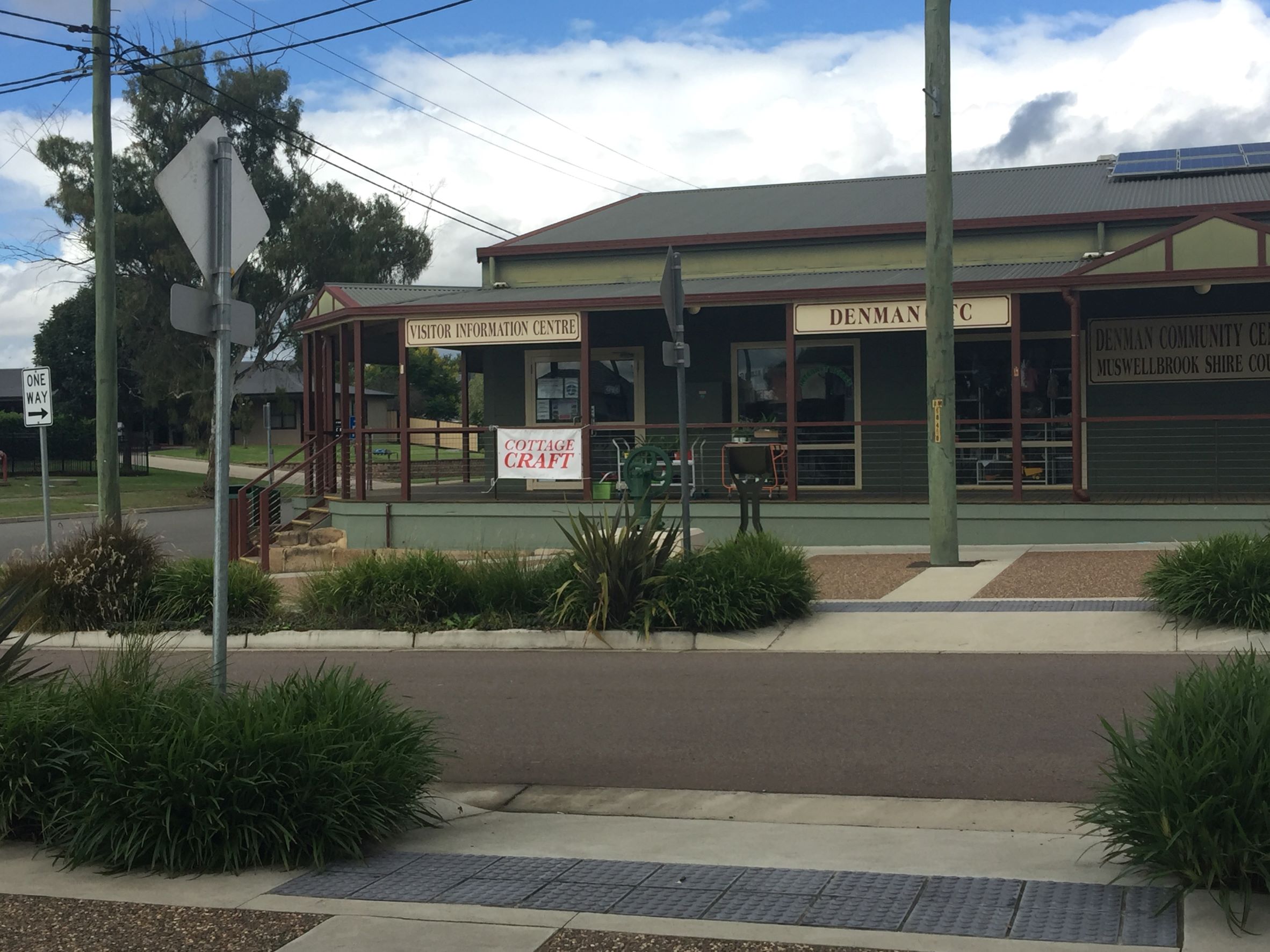
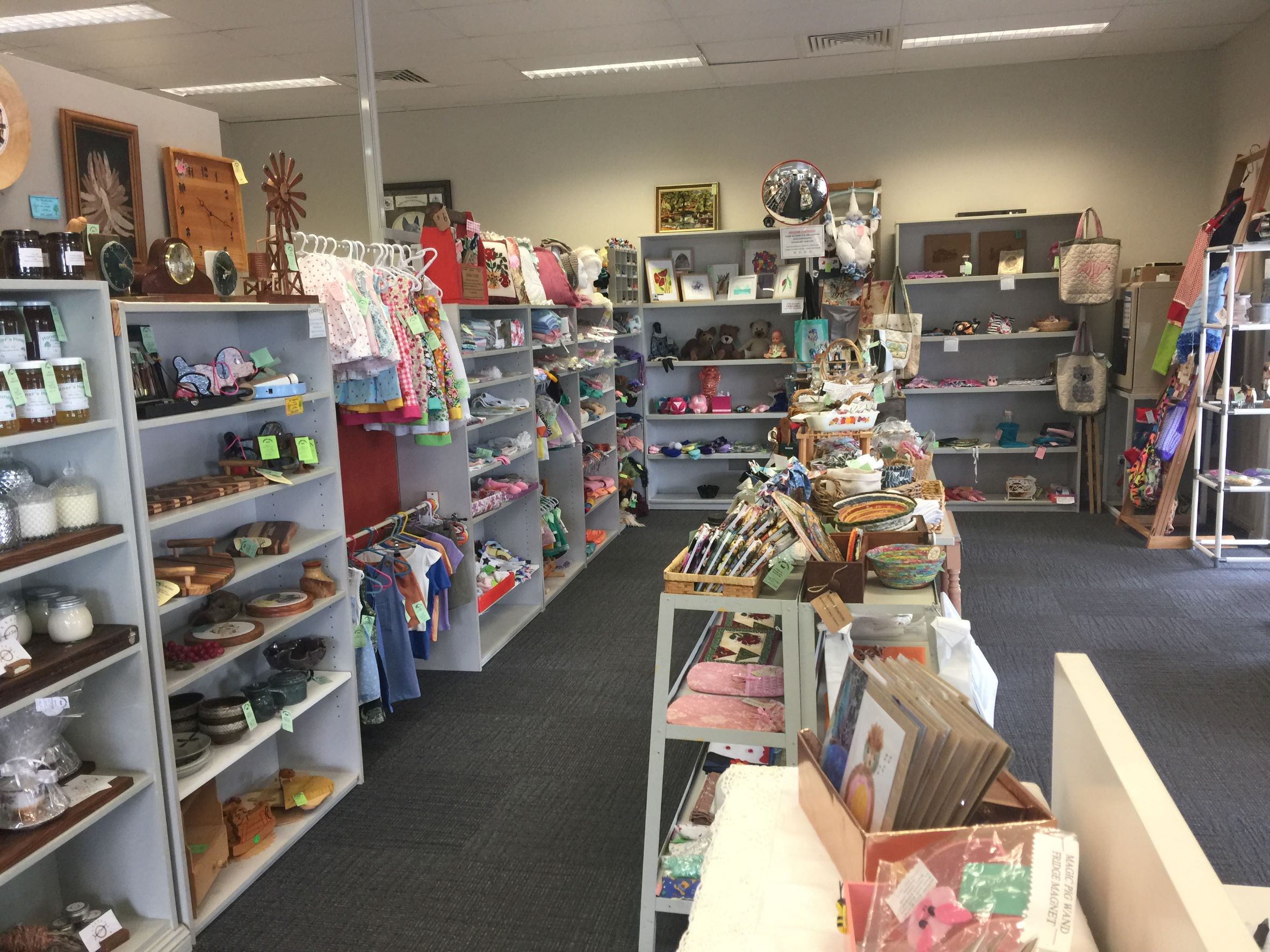
We picked up a rooster ornament and some information about the town.

Surveyor Henry Dangar camped not far from the present day town site in 1824, and Peter Cunningham and William Ogilvie came the following year. The first village in the area was the other side of the Hunter River, Merton was established as a private village in 1826 by Lieutenant William Ogilvie. He built his home first and named it after his hometown in Surrey. Settlers then came and a private town was established on his property. It had a courthouse, post office, church, school, stores and cemetery. By 1853 the township of Denman, on the other side of the river was gazetted and named in honour of Thomas Aitchison Denman, former Chief Lord Justice of England. The main street is Ogilvie Street and it has been declared an urban conservation area to preserve the look of the 1930's country town.

I did find a quilting shop - Thimbles & Threads and purchased some fat quarters. These two shops use to be a barber's and a saddler's.
The town has many heritage plaques along the main street, telling of the history of the buildings and the town.
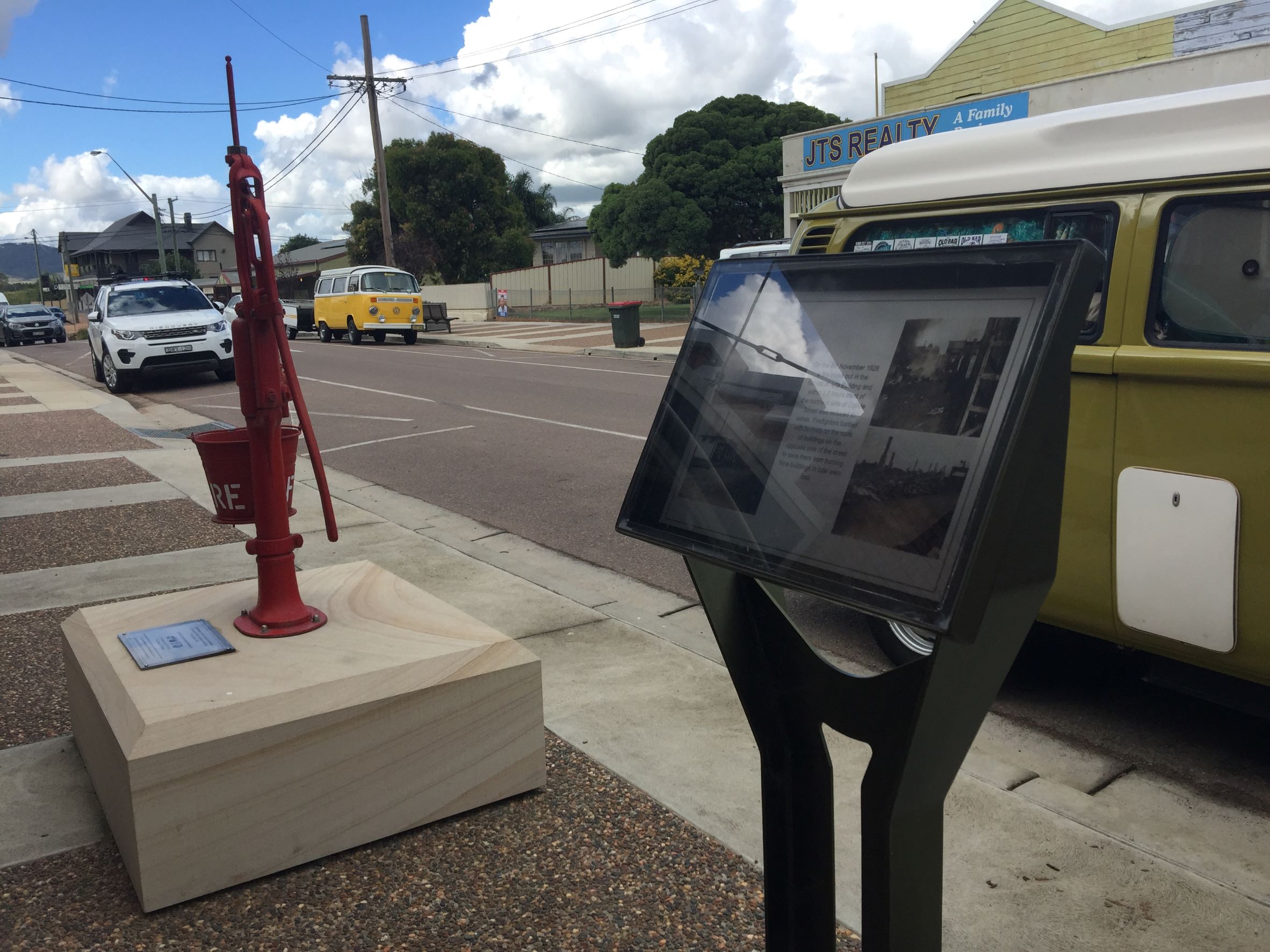
In 1928 the town main street was mostly destroyed by fire. On November 8, 1928 a large fire started in the movie projection room in the town hall and destroyed all but 2 buildings, one being the Royal Hotel. The day had been very hot and there was a strong westerly wind that spread the fire. This has lead to most of the main street being build in 1928-1930. This Monkey Tail fire pump has been restored as a reminder of that day.
Denman has also been affected by floods, including the two early this year (2022).
Old Duggan's Garage on the corner of Palace and Ogilvie Streets.
Old Kranze Produce Store.
Denman Memorial Hall was rebuild after the fire.
One block up from Royal Hotel is St Mattias Anglican Church built between 1871-1875. It was commissioned by the White family (relatives of the author Patrick White) who had bought the Merton and other properties in the area. It is listed by the National Trust. St Matthias served as a missionary in Judea and was stoned and beheaded

Many films and TV series have been made in and around Denman, including 'The Shiralee' and 'Born to Run'. Denman is also close to the Wollemi National Park and Goulburn River National Park. Denman today is a dairy farming area, and although many of the dairies have closed in later years, dairy production is still the major industry, with wineries and vineyards, and horse studs becoming more prevalent. Denman is located 250km north of Sydney, and 130km north-west of Newcastle.

Monday, 15 August 2022

Royal Hotel - Denman, New South Wales

Originally named Merton, Denman is located in the N.S.W. Upper Hunter Valley on the Hunter River. We didn't have Denman on our planned travel itinerary, but then our itinerary often changes, funny how that happens. We stayed behind the pub - The Royal Hotel - in the patrons car park. There is a large area specifically for caravans and another large paddock area behind it.

We had travelled 90 mins. from Maitland, about 110km away, and arrived early afternoon. There were a couple of vans already set up so we chose a site next to the road, which was very quiet.

Just as well we got there early as many more vans came in later that afternoon and evening. There are 11 designated level caravan/motor home sites, and an additional large paddock for tents and overflow vans.  

It was actually a lot better than some caravan parks. There were toilets, showers and drinking water available. It is a 72 hour limit, and three days is enough to explore the town of Denman - and one doesn't need to unhitch.

We had a walk around the pub and had dinner which was great, and very reasonable prices. We went to early dinner, about 5.30pm, before the rush.

The food was really good, and large servings too. The pub also has a take-away service.

We even had enough leftovers to have lunch the next day. A plaque on the hotel says it was built in 1910. 

However, depending on what one reads the dates vary between 1913 and 1917. 

What is known is the hotel is on land that a grand house built by George Augustus Frederick Kibble in the 1860's was on (I'm not sure if the hotel is the same house); and it was the only building on this side of the street not to burn in the 1928 fire - more about that next blog. There is a sign in the footpath outside the pub with 'Kelvin Grove' written on it. That was the name given to Kibble's grand home.

The hotel staff were friendly and helpful - always good when travelling - and as I said the food was great. There is indoor and outdoor covered eating and drinking areas, with an open fire inside and even a jumping castle outside.
We will definitely be coming back.

Monday, 4 July 2022

Killer Whale Museum - Eden NSW

Killer Whale Museum - Eden NSW, is famous for telling the story of Old Tom, whose skeleton has pride of place in the first hall of the museum. Driving up from the port of Eden towards the town is the purpose built museum for Old Tom.

The skeleton of Old Tom was found on September 17, 1930 by Allie Greig. This prompted the construction of the Eden Museum, a place to showcase not only the story of Old Tom, but also the whaling industry and the history of the area. Tom's body was processed at Davidson Whaling Station and local businessman, John R Logan set the scene for the construction of the museum. A committee was formed and the building was completed in 1938 and Old Tom installed in 1939. Unfortunately Logan passed away late 1937 and never saw his vision complete. The outside walls now have beautiful murals on them depicting the local history.

There is a small car park at the top of the hill outside the entrance, and the view is spectacular, a great place to sit and enjoy, especially if one has walked up the hill.

Eden was the site of the first permanent shore-based whaling station, so it is relevant that a Whale Museum is located there. Old Tom was an Orca - Orcinus Orca (aka Killer Whale) - and preyed on Baleen Whales. The first hall is all about Old Tom and first whaling stations. It is the only full skeleton of a killer whale in the Southern Hemisphere.

There is also the original capstan from Davidson Whaling Station (we saw the replica there).

There are many halls dedicated to different aspects of whaling and the history of the area. The Katungal Aboriginal people had a unique bond with the killer whales and there is a small area dedicated to this part of the history. However, much of the Aboriginal history is written about in many of the different halls.

Killer Whales, or Orca's are one of 35 species of the oceanic dolphin family and are believed to be about 11millions years old.

After the introduction hall, with Old Tom and the history of whaling in the area, we went to the theatre hall and saw a very informative film of the history of whaling in the area.
Upstairs is mostly the history of whaling in the area.
 Downstairs is mainly the history of the area, the timber getting, the gold rush, and the farming and exploration.
There were two areas, one upstairs and one downstairs that were closed, getting ready for new exhibitions, and the lighthouse was closed.
There is a good gift shop and the volunteer staff were very knowledgeable. There is no cafe or food available, but a short walk down the street one will find places to eat and drink.
Cost was $15 per adult and it was well worth it, especially if one wants to know about the local area history. It is probably better suited to adults who like to read as there is so much information available. We spent just over two hours there, and saw a few children that were bored.

Monday, 27 June 2022

Davidson Whaling Station

  We stayed at Ingenia Holiday Park just south of Eden and travelled the short distance of 30 mins - 29km, to the Whaling Station. We went to have a look at Boyd's Tower first, but the road in was closed. So off to the Davidson Whaling Station.
Located on the Kiah Inlet at Twofold Bay, Davidson Whaling Station was the longest running shore-based whaling station in Australia, and the last of its type to close. It is a short walk from the car park to the old dwellings, now a private residence, ....
.... and another short walk to the ruins and the beach.

This is where the Davidson family set up their home and whaling station. Three generations of the Davidson family operated this station using traditional bay-whaling techniques using open boats and hand held harpoons. They were also assisted by a pack of killer whales, or orcas, who would drive the Southern Right and Humpback whales up onto the beach. The area has interpretative signs and easy walkways.

The Davidson home, named Loch Garra, was built about 1896 and is situated on 17 acres of freehold land and was planted with fruits, vegetables and beautiful gardens. The family of 10 : George and Sarah, and their eight children, Jack, Effie, Roy, Sarah, Jim, Wallace, Elsie and Carrie also had chickens and dairy cows making the family mostly self sufficient.

However, that was not the first house on the property. In 1857 Alexander Davidson, George's grandfather, built Kiah House opposite from where Loch Garra was built. He built the house using material from the shipwreck of the Lawrence Frost. Kiah House was destroyed by fire in 1926.
The Whaling Station was established by Alexander Davidson in 1826 and was built using equipment purchased from the failed Ben Boyd whaling station. The Davidson's used green coloured boats, the colour of the traditional Davidson tartan, and used harpoons instead of guns. It is believed the orcas could recognise the green colour and as the harpoons were quiet they felt safe to help the whalers. Remnants of equipment can be found throughout the property.
A short walk from the homestead along a wooden boardwalk and dirt path takes one down to the beach on the left and the old whaling equipment on the right.

The Orca's would spot a whale and head to the station to alert the whalers by slapping their tails on the surface of the water, known as flop-tailing. The whalers would head out to the location, guided by the orcas. The orcas would 'corral' the baleen whales towards the whalers, where they were harpooned until they died. The next day the whalers would pull the dead whale back to the station using metal ropes and the assistance of the orcas.
At the station the whale was processed. This a replica of a whale winch, a capstan, which was used to hold the whale carcass in place while the blubber was being striped.
Thick layers of blubber  were removed and boiled in water until the oil rises to the top. The oil overflowed into gutters and into try-pots to cool before being put into barrels. The off cuts were thrown on the fire to keep the water boiling. Try-pots had been in this bay back in the 1840's when a Hawaiian man, Otaheti Bill, set up his try-pots in the bay.

The oil was used for lighting and soap. The try-works was last used in 1929, and fell into disrepair. The whalers would only catch about 8 whales a year, and only the whales that the orcas had been naturally hunting. The local Aboriginal people observed the nature of the killer whales, orcas, and developed ways to benefit from their behaviour. George Davidson also learnt from orca behaviour and used it to his advantage. The Davidson Whaling Station operated until 1932. George Davidson and his family lived in Loch Garra until 1945. There is so much information at the Eden Killer Whale Museum.

Entry into the Whaling Station is free, and well worth a visit. Take a picnic lunch and enjoy the beach.